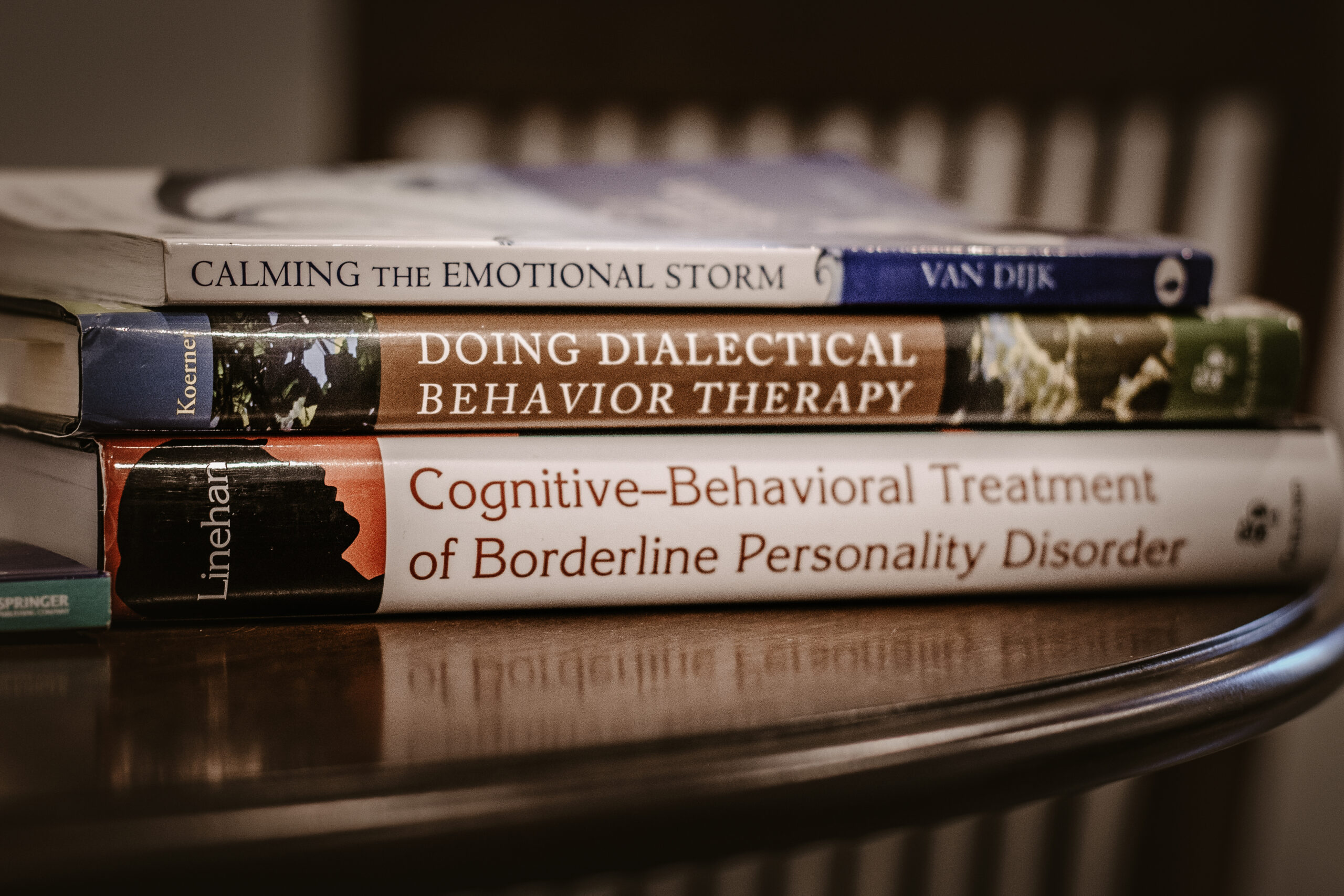
Dialectical Behavior Therapy (DBT) was created by Dr. Marsha Linehan, and was originally created to treat Borderline Personality Disorder- as an alternative to standard psychotherapy treatments for individuals struggling to regulate their emotions. DBT is an evidenced based form of cognitive behavioral therapy for teenagers and adults experiencing difficulty managing their thoughts, emotions and behaviors. The goal is to help clients build a life worth living. It is founded on the concept of dialectics, or the idea that two things that seem like opposites can in fact both be true at the same time. DBT strives for a balance between acceptance (we are doing the best we can) and change (we need to work harder and be more motivated).
Source: https://www.utoronto.ca/
DBT is comprised of four skills training modules:
Mindfulness- the practice of being completely aware and present in the moment
Interpersonal Effectiveness-how to ask for what you want/obtaining goals/keeping relationships and maintaining your self-respect
Emotion Regulation-reduce emotional suffering/decrease the frequency of unwanted emotions
Distress Tolerance-how to tolerate emotional pain/emotional crisis situations without making them worse
Services Offered
Currently, Peaceful Presence Counselling Services is offering DBT Skills Training Groups and therapy for individuals and families who wish to work on achieving greater behavioral control. The purpose of DBT Skills Group is to learn new skills to replace ineffective ones and trying the new skills in your real life in the environment to which they are needed most. New skills are taught with each group session. DBT Skills Groups will resemble more of a teaching session and not therapy. Therapy can be provided in conjunction with the Skills Training Groups.
Video
What is DBT
Watch this quick video for insights into DBT and who it may help.